Start the conversation today. Fill out the form and take the first step toward measurable growth.
Thank you! Your submission has been received!
Oops! Something went wrong while submitting the form.
Close
Local SEO for Dentists: Ranking Your Dental Practice
When someone nearby searches “dentist near me,” the practices that show up first get the calls, the bookings, and the patients. Everyone else stays invisible. This guide to local SEO for dental practices walks through exactly how to rank higher in local search, from optimizing your Google profile to earning reviews, strengthening your dental SEO, and creating local content that helps search engines connect your practice to the patients looking for you. Whether you run a solo office or a growing group, these local SEO strategies for your practice are practical, patient-focused, and built for how search works in 2026. Learn how to rank, and you turn local searches into a steady flow of booked appointments.
What Is Local SEO for Dentists and Why Does It Matter?
Local SEO for dentists is the ongoing work of optimizing a practice's online presence so it appears prominently when potential patients search for dental services nearby. Unlike broad SEO, it focuses on geographic relevance, making sure your practice shows up for searches like “dentist near me” or “teeth whitening in [your city].” For a dental office, this is where new patients actually come from, since almost nobody chooses a provider from three towns over.
Why it matters comes down to how patients behave now. Before booking, people search, read reviews, and compare practices, often from their phone, at the exact moment they need care. BrightLocal's research shows the vast majority of consumers use online search to find local businesses and read reviews before choosing one, and healthcare providers are no exception. If your practice doesn't appear in those local searches, a competitor down the street captures that new patient instead. Strong local SEO ensures your practice shows up at that decisive moment, turning a search into a phone call and a phone call into a booking.
The stakes are higher in dentistry than in many fields because choosing a provider is a trust decision. Patients want a provider who feels credible, well-reviewed, and close by. Local SEO helps a practice build that trust and visibility at once: it puts you in front of nearby patients and signals, through reviews and consistent information, that you're a legitimate, established practice worth booking. Get it right and local SEO becomes one of the most cost-effective ways to grow your patient base, which is why it anchors our digital marketing for dental practices.
How Does Your Google Business Profile Drive Local Rankings?
Your Google Business Profile is the single most important asset in local search for dentists, because it powers your visibility in Google Maps and the local pack, the three-result map box at the top of local search results. When a nearby patient searches for care, Google leans heavily on these profiles to decide which practices to show. A complete, well-optimized listing can outrank far larger competitors for local searches.
Start by claiming and verifying your profile, then fill out every field completely. Your practice name, address, and phone number must be accurate and consistent; choose the right primary category (dentist) and relevant secondary categories for your dental services; add real photos of your office and team; and keep your hours current. Google's own guidance confirms that complete, accurate information and active engagement improve your local ranking. Each of these signals helps Google understand what you do and where, lifting you in local search.
Then keep it active. Post updates, answer questions, add new photos, and respond to every review. Google favors profiles that look alive and engaged, and an active profile signals a real, thriving practice. This ongoing attention, not a one-time setup, is what separates practices that rank in the local pack from those buried below. If you want the fuller picture of how the map results work, our guide on ranking higher on Google Maps covers the map side in depth.
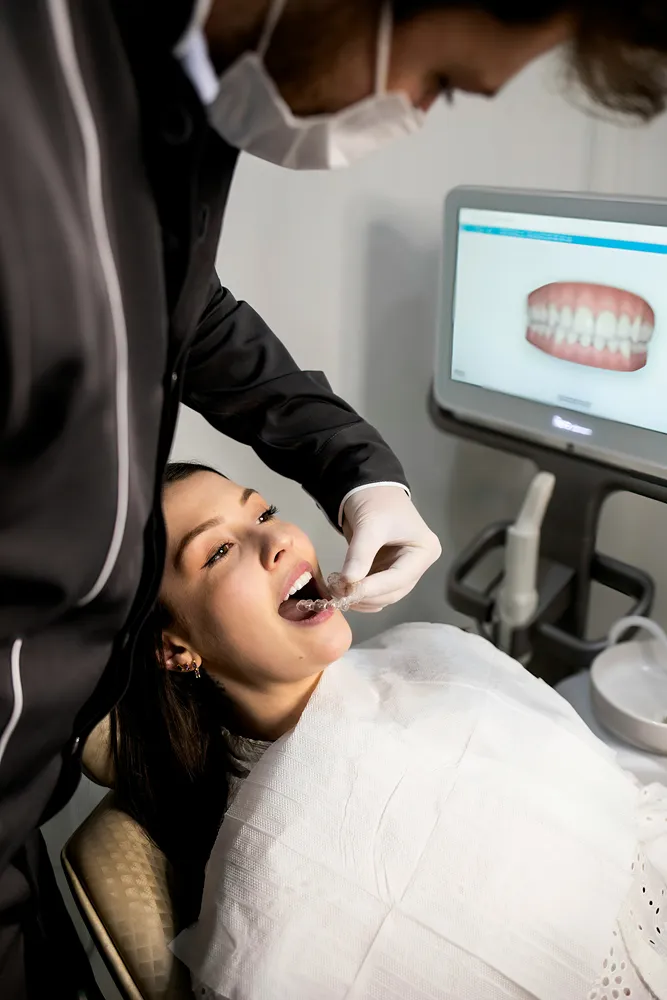
Positive visits lead to the reviews that lift local rankings.
Why Are Reviews So Important for Ranking a Dental Practice?
Reviews do double duty in local SEO: they're both a ranking factor and a trust signal, and for a practice, they may be the single most powerful lever you have. Google weighs the quantity, quality, and recency of your reviews when deciding local search rankings, so a practice with more and better recent reviews tends to appear higher in local search results. At the same time, potential patients read those reviews to decide whether to trust you with their care.
The work here is steady, not dramatic. Ask satisfied patients to leave reviews, and make it easy by sending a direct review link after their visit. A gentle, consistent habit of requesting reviews produces a natural, ongoing flow, which both patients and Google prefer over a sudden burst. Respond to every review, thanking happy patients and addressing concerns professionally, since your responses show prospective patients you're attentive and engaged.
A note on doing this the right way: never offer incentives in exchange for reviews. It violates Google's policies, and for dental practices, it can raise professional and advertising concerns as well, since the ADA's Code of Professional Conduct addresses truthfulness in how dentists advertise and represent their practices. The goal is genuine feedback from real patients, gathered consistently over time. Done well, review-building steadily improves both your online reputation and your local search presence, and few local SEO tactics deliver more for a dental office. For a deeper playbook on strengthening your local presence, our guide on AI-powered local SEO strategies covers the systems that compound over time.
What Role Do Citations and Directories Play?
A citation is any online mention of your practice's name, address, and phone number, the “NAP” that ties your identity together across the web. Local citations on directories like Yelp, Healthgrades, and your state dental association's pages help search engines confirm that your practice is real, established, and located where you say it is. Consistent NAP data across the web is one of the foundational signals behind a strong local ranking.
The key word is consistency. Your name, address, and phone number must match exactly everywhere they appear, on your Google profile, your website, and every page that mentions you. Even small discrepancies, “Street” versus “St.,” an old phone number on a forgotten page, can confuse search engines and weaken your local SEO. Audit your citations, correct anything inconsistent, and keep them aligned as your practice information changes.
Beyond the big general sites, seek out dental-specific and local listings. Healthgrades, Zocdoc, and your local dental association or chamber of commerce all carry weight for a practice. These local citations build relevance and send trust signals that generic directories don't. Managing this by hand across dozens of sites is tedious, which is why many practices use professional listings management to keep their information accurate everywhere at once.
How Do You Optimize Your Dental Website for Local Search?
Your dental website is where local SEO efforts either convert or leak away. It needs to load fast, work flawlessly on mobile, since most patient searches happen on phones, and make booking obvious with clear calls to action and an easy-to-find phone number on every page. A slow, confusing site loses the patient you worked so hard to reach through local search. Optimize the basics first, because they shape both rankings and bookings.
On-page optimization tells Google what you do and where. Create dedicated service pages for your key treatments, cleanings, implants, whitening, Invisalign, each targeting the terms patients actually search. Include your city and neighborhood naturally in page titles, headings, and content so Google understands your location. Add local business schema markup to help search engines read your practice details. These on-page signals, combined with your Google profile, strengthen your visibility in local search.
Local content deepens your relevance. A blog answering common questions, “how long do dental implants last,” “is Invisalign worth it,” along with dental health tips and local community involvement, gives search engines fresh, relevant content to rank and gives patients reasons to trust you. This kind of local content targets the long-tail phrases patients use and positions your practice as the helpful local expert. If you want the fundamentals of ranking a site, our guide to local SEO versus traditional SEO explains why local search works differently.
Target the local, intent-driven terms patients actually search.
Which Keywords Should a Dental Practice Target?
Keyword research for a practice starts with how patients actually search. They use local, intent-driven phrases: “emergency dentist [city],” “dental implants [neighborhood],” “teeth whitening near me.” These local keywords carry high intent, the searcher needs care now, and ranking for them puts your practice in front of ready-to-book patients. Building your site and profile around these terms is the core of local SEO for dental practices.
Group your terms by the services you offer and the patients you want. Each major dental service deserves its own optimized page targeting the specific phrase for that treatment, plus your location. A page built for “dental implants [your city]” will rank and convert far better than a single generic services page trying to cover everything. This structure helps Google match your practice to specific patient searches and helps patients find exactly what they need.
Don't overlook question-based and long-tail searches. Patients typing “how much does a root canal cost” or “best pediatric dentist near me” are often close to booking, and content answering those questions captures them. Local keyword targeting, tied to real patient searches and your specific services, is what turns your local SEO efforts into booked appointments rather than just traffic. Match your pages to patient intent, and your rankings translate into new patients.
How Do You Track Local SEO Success for Your Practice?
You can't improve what you don't measure, so tracking is essential to local SEO success. Start with the metrics that matter for a practice: how many new patient calls and bookings your local search presence generates, where you rank for your target local terms, and how many people find you through Google Business Profile versus your website. These numbers tell you whether your local SEO efforts are actually producing patients, not just clicks.
Use the tools built for this. Google Business Profile insights show how patients find and interact with your listing, how many called, requested directions, or visited your site. Google Search Console and Google Analytics reveal which searches and pages drive traffic and bookings. Watching these over time shows what's working and where to focus, so you invest effort in the local SEO tactics that actually move the needle for your practice.
Track your local rankings for key terms, too. Seeing where you appear for “dentist near me” and your priority service keywords, and how that changes month over month, tells you whether your optimization is paying off. Local SEO is a long game; rankings and results build over months, so patience paired with steady measurement is the winning approach. Measure consistently, double down on what works, and your local search presence compounds into a reliable source of new patients.
What Are the Most Common Local SEO Mistakes Dentists Make?
The most common mistake is neglecting the Google Business Profile, either never claiming it, leaving it half-finished, or setting it up once and never touching it again. An incomplete or inactive profile is invisible in the local pack no matter how good your care is. Claim it, complete every field, and keep it active, this single fix often produces the fastest improvement in local search visibility for a dental practice.
Inconsistent information is the next big pitfall. When your name, address, and phone number don't match across your website, Google profile, and other sites, search engines lose confidence and your local SEO suffers. Many practices also ignore reviews, both failing to ask for them and failing to respond, which sacrifices one of the strongest ranking and trust signals available. And plenty build a website that looks fine but isn't optimized for local search or mobile, quietly losing patients who found them but couldn't easily book.
The last common mistake is impatience. Local SEO isn't instant; some practices try it for a month, see little, and quit right before results compound. Others chase quick fixes or buy fake reviews, tactics that backfire and can get a listing penalized. Strong local SEO for a practice is steady, honest, and ongoing, claim and optimize, earn genuine reviews, keep information consistent, and measure. Avoid these mistakes and your practice steadily climbs where nearby patients are searching.
Strong local SEO keeps a steady flow of patients in the chair.
Should You Handle Local SEO Yourself or Hire Help?
Plenty of practices handle the basics of local SEO themselves, and for a solo office with time to learn, that's reasonable. Claiming and optimizing your profile, asking patients for reviews, and keeping your information consistent are all doable in-house, and they cover a large share of what drives local search. If you're just starting, begin here, these fundamentals deliver the most return for the least cost.
The case for help grows as competition and complexity rise. Ongoing profile upkeep, technical website optimization, local content creation, and consistent review generation take time most practice owners and office managers don't have alongside treating patients. In competitive markets, the difference between page one and page two of the local pack often comes down to the steady, expert execution a busy practice can't sustain on its own. That's when a marketing partner earns its keep.
If you do bring in help, choose a partner who understands dental practices and healthcare marketing, including the trust and compliance considerations the field involves. VisioneerIT helps practices attract new patients through reputation management and local search work tailored to how patients actually find care. Whether you do it yourself or get help, the fundamentals don't change: show up in local search, build trust through reviews, and make booking easy for nearby patients.
Key Things to Remember
Local SEO for a dental practice puts you in front of nearby patients searching for dental services, and it's where most new patients now come from.
Your Google Business Profile drives your local ranking and the local pack; claim it, complete every field, and keep it active to rank higher in local search.
Reviews are both a ranking factor and a trust signal, ask satisfied patients consistently, respond to every review, and never offer incentives in exchange for reviews.
Consistent citations across listings, with matching name, address, and phone number, confirm your practice is real and boost your local ranking.
Optimize your dental website for speed, mobile, and easy booking, with service pages targeting local keywords and local business schema markup.
Target local, intent-driven keywords like “dentist near me” and service-plus-city terms, with a dedicated optimized page for each key dental service.
Track local SEO success with Google Business Profile insights, Search Console, and rank tracking, and give it months, local SEO compounds over time.
Avoid the common mistakes: an unclaimed or inactive profile, inconsistent information, ignored reviews, and impatience that makes practices quit too early.
Handle the fundamentals in-house if you can, then bring in help for the technical work, content, and ongoing optimization as competition rises.
Strong local SEO is steady and honest: show up in local search, build trust through genuine reviews, and make it easy for nearby patients to book.
Frequently Asked Questions
How long does local SEO take to work for a dental practice? Most practices see meaningful movement in local search results within three to six months, though optimizing your Google Business Profile can produce faster early wins. Local SEO compounds, so results build over time.
Is Google Business Profile the same as Google My Business? Google renamed Google My Business to Google Business Profile, so they refer to the same tool. It remains the foundation of local SEO for a dental practice.
Can I do local SEO for my dental practice myself? Yes, the fundamentals, claiming and optimizing your profile, earning reviews, and keeping information consistent, are all doable in-house. Many practices bring in help as competition and workload grow.
Ready to Rank Higher and Attract More Patients?
Local SEO is how modern practices fill their schedules, but doing it well, and consistently, takes time most providers would rather spend with patients. If you'd like experts to handle your Google profile, reviews, directories, and local content while you focus on care, VisioneerIT can help. As a marketing partner that understands dental offices and the trust that patients place in their providers, we build local SEO that puts your practice in front of nearby patients and turns searches into booked appointments. Book a private consultation through the form on our site, and we'll map out a local SEO plan built for your practice, your patients, and your goals. More visibility, more patients, a fuller schedule, that's the goal.





.svg)